Versioning Audio Models Without Breaking Customers
BreakingThe $500K Model Upgrade: Why Your "Better" AI Just Destroyed 200 Production Systems
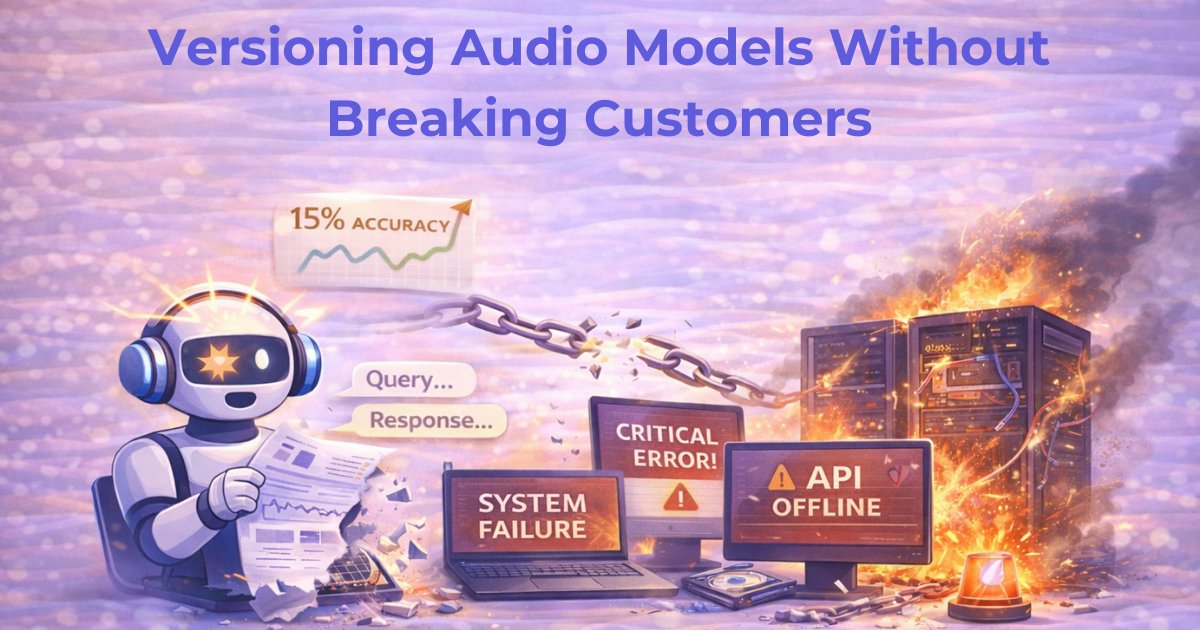
Your audio AI model just got dramatically better. New training data, improved architecture, 15% higher accuracy across benchmarks. Your team is celebrating. The demo looks incredible. You're ready to push it to production and watch user satisfaction soar.
Then you deploy.
Within hours, support tickets flood in. A healthcare company's medical transcription pipeline is producing garbled output. An e-learning platform's pronunciation training system is failing validation checks. A call center's quality monitoring broke overnight. Your "improvement" just cost customers hundreds of thousands of dollars in emergency fixes and downtime.
Welcome to the versioning nightmare every audio AI platform faces: models must evolve to stay competitive, but customers build critical production systems around your API's exact behavior. Change that behavior without warning, and you've just broken trust, destroyed integrations, and potentially violated SLAs.
This isn't hypothetical. This happens constantly in production. And it's almost always preventable.
Let me show you how to evolve audio models without leaving customers stranded, angry, and looking for alternatives.
The Fundamental Problem: Models Aren't Deterministic Software
Traditional API versioning feels straightforward. You change an endpoint's response structure, bump the version number, document the changes, maintain old versions temporarily. Developers read docs, update their code, everyone moves forward.
Audio models are fundamentally trickier, and most teams don't understand why until it's too late.
Non-Deterministic Behavior: The Same Input Produces Different Outputs
Neural networks have inherent randomness in inference. Temperature sampling, dropout, numerical precision variations—all create non-determinism.
The same text input to your TTS system might generate slightly different audio waveforms each time. Usually this doesn't matter. But customers building downstream systems that fingerprint or validate audio outputs suddenly find their validation failing randomly.
You didn't change anything intentionally. But the randomness that was always there just became visible when customers built brittle dependencies on exact outputs.
Pronunciation Changes: Correctness Doesn't Equal Compatibility
Your improved model pronounces "data" as "day-ta" instead of "dah-ta". Both are correct. Neither is wrong. But customers who trained downstream speech recognition systems, built pronunciation training apps, or simply cached and reused previous outputs now have inconsistent audio.
A reading comprehension app synthesized 1,000 educational passages with v1. They're adding new content with v2. The same words sound different between old and new content. Kids notice. Teachers complain. The app developer blames your API.
Technical correctness doesn't guarantee compatibility. This is the insight most engineering teams miss. Understanding how to measure voice naturalness reveals why pronunciation consistency matters as much as technical quality improvements.
Timing Variations: Speed Changes Break Assumptions
Faster inference is usually good, right? You optimized your model, cut latency from 200ms to 50ms. Customers should be thrilled.
Except some customers built timing-dependent code. They expected processing delays. Their UIs show loading indicators based on predicted processing time. Their orchestration systems schedule subsequent steps assuming 200ms. Your speed improvement triggers race conditions they never tested for.
Or worse: your improved quality model is 2x slower. Customers built real-time conversational systems assuming 200ms latency. Now they're hitting 400ms, and their user experience collapsed. The better model made their product worse.
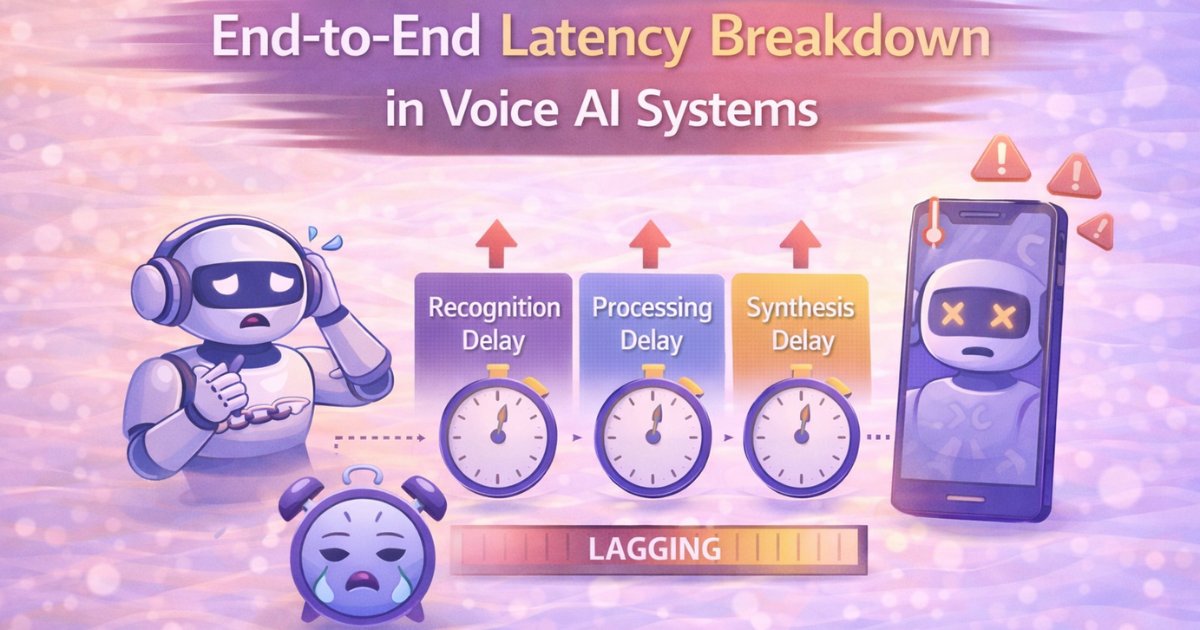
Understanding end-to-end latency breakdown in voice AI systems helps you predict how timing changes propagate through customer systems.
Output Format Shifts: Subtle Changes Break Parsers
Your ASR improves number and date formatting. "5 PM" becomes "5pm" or "five PM" or "17:00" depending on context. Capitalization changes. Punctuation placement shifts.
Customers parsing transcripts with regex or basic string matching break instantly. Their code expected specific formats. You changed formats to be more consistent or natural. You broke their production systems.
A customer care analytics company parses millions of call transcripts to extract appointment times, dollar amounts, product names. Your format changes require rewriting parsers across their entire codebase. They're not happy about your "improvement."
This is why handling numbers, dates, and special characters in TTS requires careful versioning—any normalization changes break downstream parsers.
URL-Based Model Versioning: The Non-Negotiable Foundation
The solution starts with explicit versioning, but most teams implement it wrong or too late.
Explicit Version in Endpoints: Make It Impossible to Accidentally Upgrade
Include model version directly in API paths. Not in headers. Not in parameters. In the URL itself.
Instead of generic endpoints:
POST /tts/generate
POST /asr/transcribe
Use versioned paths:
POST /v1/tts/generate
POST /v2/tts/generate
POST /v1/asr/transcribe
POST /v2/asr/transcribe
This makes version explicit and intentional. Customers can't accidentally upgrade by leaving a parameter blank. Their code hardcodes the version they tested against.
When you deploy v2, v1 continues working unchanged. Customers migrate when ready, not when you force them.
When designing clean audio AI APIs, explicit URL-based versioning is your first line of defense against accidental breaking changes.
Immutable Versions: V1 Stays V1 Forever
Once deployed, v1's behavior never changes. Not for quality improvements. Not for pronunciation refinements. Not for better formatting.
Bug fixes that don't change output are acceptable—fixing crashes, memory leaks, security issues. Behavioral changes of any kind require a new version.
This immutability gives customers confidence their code won't suddenly break. They can deploy on Friday knowing Monday won't bring surprise failures.
This feels restrictive to engineering teams used to continuous improvement. Get over it. Your customers' production stability is more important than your desire to force upgrades.
Long Deprecation Windows: 12-18 Months Minimum
Don't sunset old versions quickly. Customers need time to test v2 in staging, validate it across their entire test suite, update parsing logic, retrain downstream models, and migrate production traffic gradually.
"We're deprecating v1 in 3 months" destroys trust. Customers with complex integrations can't possibly migrate safely that fast.
Give 12-18 months minimum. For enterprise customers with complex deployments, consider even longer windows or indefinite support with premium pricing.
Rushed deprecation tells customers you don't value their stability. They'll remember that when choosing providers.
Clear Migration Paths: Document Every Single Difference
Don't just announce "v2 has improved accuracy." Document specific behavioral differences:
Voice changes: "Hindi female voice has slightly lower pitch, faster speaking rate"
Pronunciation changes: "Numbers under 100 now use natural speech patterns ('twenty-five' instead of 'two five')"
Format changes: "Dates now use ISO format (2025-03-15 instead of 15/03/2025)"
Timing changes: "Average latency reduced from 200ms to 120ms"
Provide side-by-side examples showing old vs. new output for common inputs:
V1 Output:
"The meeting is at 5 PM on 15/03/2025."
V2 Output:
"The meeting is at 5pm on March 15, 2025."
Customers can immediately assess whether these changes break their systems before migrating.
Parallel Deployment and Gradual Rollouts: Testing Before Breaking
Even with great versioning, you need mechanisms to discover breaking changes before customers do.
Shadow Testing: Find Issues Before Public Launch
Before launching v2 publicly, run it in shadow mode. For every v1 request, also process with v2 internally without returning results to customers.
Log differences between v1 and v2 outputs. Large pronunciation changes? Log them. Format differences? Log them. Timing variations over 2x? Log them.
This reveals breaking changes in real usage patterns, not just synthetic test cases. You discover that 15% of transcriptions format numbers differently, or that certain accents trigger pronunciation shifts.
Fix the worst issues before any customer sees v2.
Understanding CPU-friendly audio inference techniques becomes critical when running multiple model versions in parallel for shadow testing—costs can spiral without careful optimization.
Opt-In Beta Period: Let Customers Discover Edge Cases
Launch v2 as opt-in beta while v1 remains default. Early adopter customers voluntarily test v2 in their staging environments.
They discover issues in their specific use cases that your testing missed. Maybe v2 handles code-mixed text differently. Maybe certain audio formats produce different outputs. Maybe their custom post-processing breaks.
Fix these issues before forcing migration. Early adopters get the satisfaction of influencing the product. Late adopters get a more stable v2 when they eventually migrate.
Phased Rollout: Limit Blast Radius
Don't switch everyone to v2 simultaneously. Start with 5% of traffic, monitor error rates and support tickets, gradually increase to 25%, 50%, 100% over weeks.
If problems emerge, they affect 5% of users, not 100%. You can halt rollout, fix issues, resume. This minimizes damage while gathering real-world validation.
For customers who explicitly pin to v1, honor that indefinitely until deprecation. Forced upgrades during phased rollout break trust.
Per-Customer Version Control: Enterprise Reality
Let enterprise customers control their version explicitly via account settings or API parameters. They migrate on their schedule after thorough internal testing, not based on your global rollout.
A healthcare company validating medical transcription might need 6 months of parallel testing. A financial services company might need regulatory approval for model changes. An EdTech platform might need to coordinate with their school year calendar.
Respect their constraints. Enterprise revenue justifies this flexibility.
Handling Model-Specific Breaking Changes
Beyond versioning infrastructure, you need strategies for specific types of model changes.
Voice Consistency in TTS: Maintain Recognizable Characteristics
When improving voice models, maintain consistent voice characteristics across versions. Enhanced voices should retain recognizable timbre, pitch range, and speaking style even as quality improves.
If v1's "conversational_male" voice has a warm, mid-range tone, v2 shouldn't shift to a higher pitch or faster cadence. Quality can improve—reduce artifacts, smoother prosody—but core characteristics stay consistent.
Customers chose voices for specific brand reasons. Changing voice personality without warning breaks their brand consistency.
Understanding trade-offs between neural vocoders helps you upgrade synthesis quality while maintaining voice character across versions.
Pronunciation Dictionaries: Maintain Common Word Consistency
For TTS, maintain pronunciation consistency for common words across versions. Build pronunciation dictionaries ensuring "schedule," "advertisement," "data" are pronounced the same way unless you explicitly document changes.
For words where pronunciation legitimately improves, provide override mechanisms:
{
  "text": "The data shows...",
  "pronunciation_mode": "v1_compatible"
}
This lets customers migrate gradually—use v2's improvements while maintaining specific pronunciation compatibility where needed.
Format Compatibility Layers: Don't Force Parser Rewrites
If ASR output format changes, provide compatibility mode:
{
  "audio": "...",
  "format": "v1_compatible"
}
This returns results using v1's formatting rules even when using v2's improved transcription model. Customers get accuracy improvements without rewriting parsers.
Eventually they should migrate to native v2 format, but this gives them time to do it properly.
Confidence Score Calibration: Maintain Threshold Meaning
If your v2 model has different confidence score distributions than v1, customers' threshold-based logic breaks.
Maybe v1 gave confidence scores between 0.6-0.95. Customers set acceptance thresholds at 0.75. V2's scores range 0.4-0.98. Suddenly their 0.75 threshold accepts different quality levels.
Calibrate confidence scores so similar values mean similar things across versions. A 0.75 in v2 should represent similar transcription quality as 0.75 in v1.
This is extra engineering work. Do it anyway. Breaking every customer's filtering logic is worse.
When evaluating ASR beyond WER, confidence calibration becomes critical—customers build entire quality assurance workflows around these scores.
Language-Specific Versioning Challenges
For multilingual audio AI, versioning complexity multiplies:
Accent Handling Changes
Improved accent robustness in Indian ASR systems might change how specific regional accents are transcribed. A customer serving Tamil speakers might find v2 handles Chennai accents better but Madurai accents worse.
Document accent-specific changes, not just overall accuracy. Customers serving specific regions need to know how v2 affects their user base.
Code-Switching Behavior
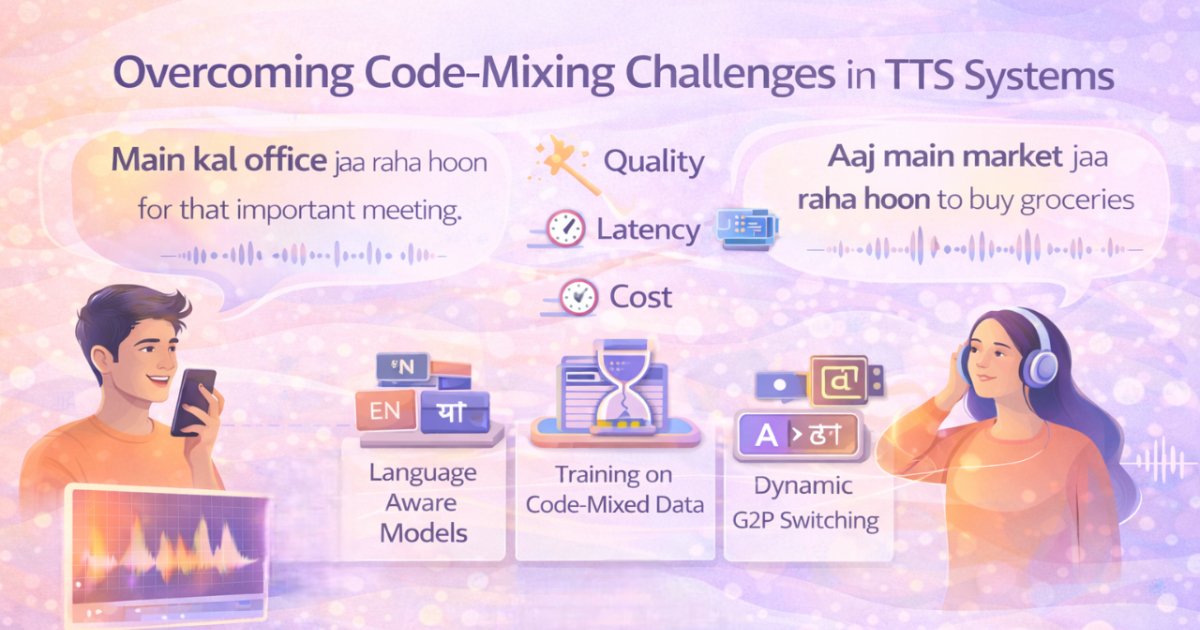
When upgrading models that handle ASR language identification and code-switching, the boundaries where language switches are detected can shift.
A customer relying on specific Hindi-English switching patterns for downstream processing suddenly finds v2 detects switches differently. Their parser breaks.
Error Pattern Changes
Different models have different error patterns in Indian languages. If v2 reduces errors on technical vocabulary but increases errors on colloquial speech, customers serving different user segments need detailed documentation.
Timestamp Accuracy
For customers relying on word-level timestamps, even small timing shifts can break subtitle synchronization or video editing workflows.
A video production company using your API for automatic subtitling finds v2's timestamps shifted by 50-100ms. Their subtitle sync is now noticeably off. They need to rebuild their entire subtitle library.
Preprocessing and Audio Quality Changes
Noise Cancellation Evolution
Upgrading noise cancellation algorithms can dramatically change output audio characteristics.
What sounds "better" to engineers might sound "different" to users who've grown accustomed to v1's specific processing. A podcast editing service finds v2's noise cancellation removes more background ambiance—which was actually part of their desired audio aesthetic.
Denoising Trade-offs
Be extremely careful when changing denoising aggressiveness. Aggressive denoising can hurt ASR accuracy, so "improving" denoising might actually break downstream transcription quality for customers who've tuned their systems around v1's specific balance.
Call Center Audio Processing
When upgrading handling of noisy call center audio, remember that customers may have built entire quality assurance workflows around v1's specific output characteristics.
A call center analytics company trained ML models to detect customer sentiment based on v1's specific noise floor and audio characteristics. V2's different preprocessing breaks their sentiment detection.
Real-Time Processing Changes
Changes to real-time noise suppression for telephony affect perceived audio quality in ways metrics don't capture.
Shadow test extensively with real call recordings before deploying. What tests well in lab conditions might sound wrong in production telephony environments.
Streaming vs Batch Considerations
Streaming ASR Migration
Streaming ASR has unique versioning challenges. Changes to how partial results are delivered, correction frequency, or finalization timing can break real-time UIs built on v1 behavior.
A live captioning service built UI update logic around v1's specific partial result timing. V2 sends partial results more frequently. Their UI flickers and becomes unusable.
Protocol Architecture Changes
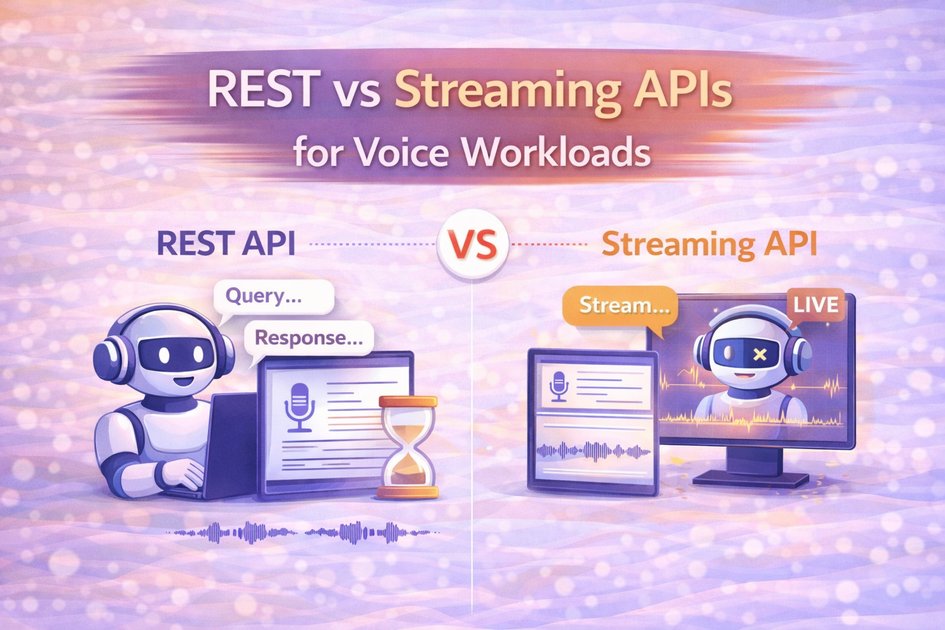
If you're evolving your architecture—for example, moving from REST to streaming APIs—this isn't just a version bump. It's a fundamental protocol change requiring extensive migration planning.
Offer both endpoints indefinitely, or provide adapter layers that maintain REST compatibility over streaming backends.
Communicating Changes: How to Not Surprise Customers
Even perfect versioning fails if customers don't know changes are coming.
Comprehensive Changelogs: Specificity Over Generality
Document every behavioral difference with examples:
Bad changelog:
"V2 improves transcription accuracy and processing speed"
Good changelog:
"V2 changes:
Number formatting: '5 PM' → '5pm', '$5.50' → '$5.50' (unchanged)
Date formatting: '15/03/2025' → 'March 15, 2025'
Average latency: 200ms → 120ms (40% faster)
Hindi pronunciation: 15% accuracy improvement, particularly for technical terms
Confidence scores: Recalibrated, 0.75 threshold recommended (previously 0.80)"
Customers can immediately assess migration impact.
Migration Testing Tools: Side-by-Side Validation
Provide endpoints for direct comparison:
POST /tools/compare
{
  "text": "The meeting is at 5 PM",
  "versions": ["v1", "v2"]
}
Returns both outputs side-by-side. Customers can submit their actual production data, validate changes before migrating.
This turns migration from "hope it works" to "validated in advance."
Deprecation Warnings in Response Headers
When v1 is scheduled for sunset, include headers in every v1 response:
X-API-Version-Deprecated: true
X-API-Version-Sunset-Date: 2026-06-01
X-API-Version-Migration-Guide: https://docs.fonadalabs.ai/v1-to-v2
Automated monitoring catches these warnings before humans need to read announcements. Customers discover deprecation through their normal instrumentation.
Email Campaigns with Actual Lead Time
Don't surprise customers. Send email notifications at:
12 months before sunset: "V1 deprecation planned"
6 months before: "V1 sunset in 6 months, please begin testing v2"
3 months before: "V1 sunset in 3 months, migration guide available"
1 month before: "Final reminder: V1 sunsets in 30 days"
Include migration guides, offer support hours, provide comparison tools. Make migration as frictionless as possible.
The Path Forward: Balance Innovation With Stability
Model improvement is essential for staying competitive. But breaking customer systems destroys trust faster than improved accuracy rebuilds it.
Version carefully. Communicate transparently. Migrate gradually. Let customers control timing.
The goal isn't preventing change—it's managing change without casualties. Your better model should make customers' products better, not break them.
Sustainable platforms balance innovation with stability. They improve relentlessly while maintaining backward compatibility until customers are ready to move forward.
Whether you're building your own TTS pipeline, building your own Indian language ASR, or building low-latency streaming systems, build versioning strategy into your architecture from day one.
Build systems that evolve without breaking. Because in audio AI, your model's accuracy matters less than your customers' production reliability.
And reliability isn't about never changing. It's about changing in ways customers can plan for, test against, and migrate to on their timeline, not yours.